Services

Shallow water mapping

Groundwater Mapping

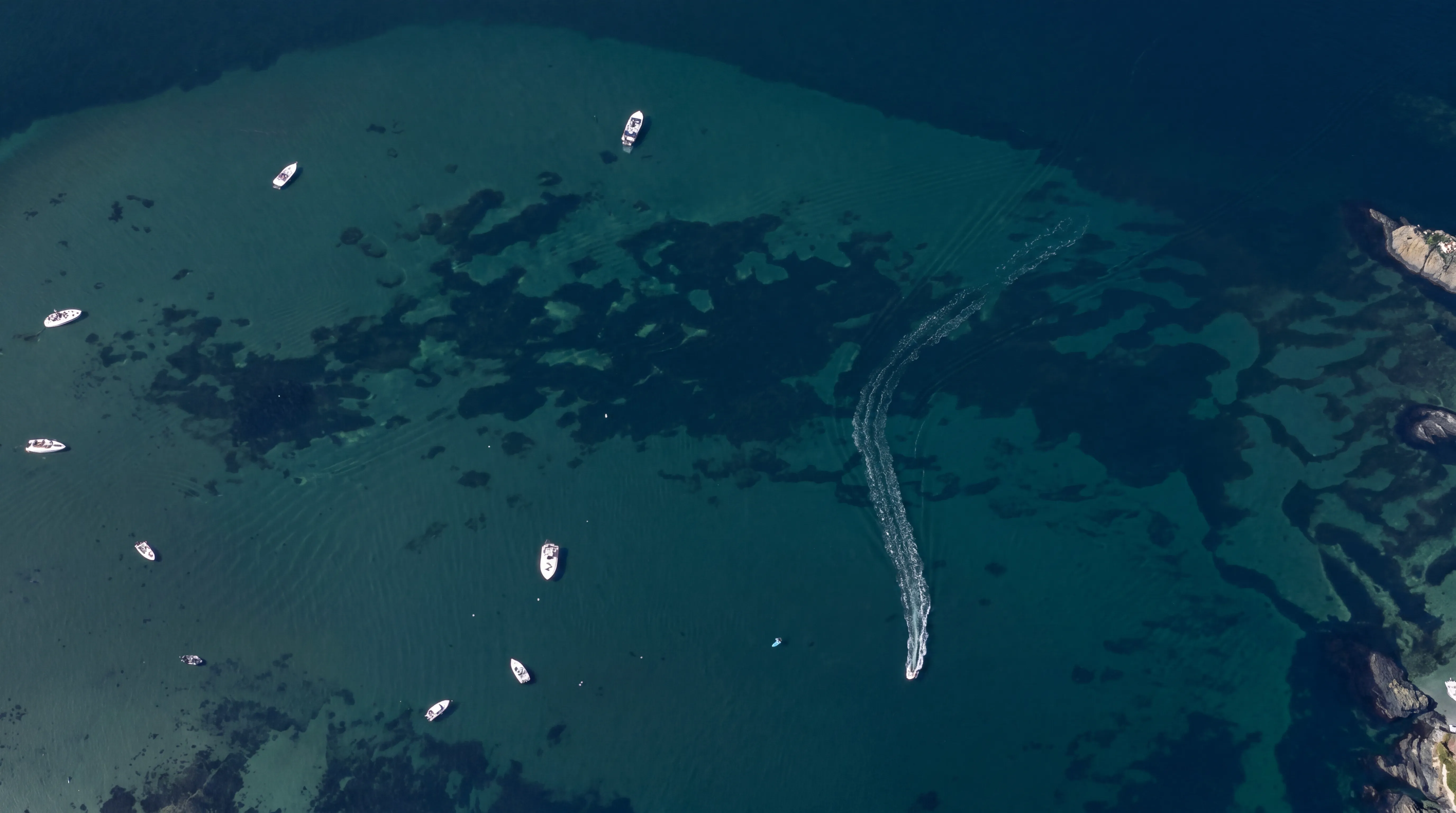
Shallow Water Mapping focuses on environments where land and water meet — including rivers, streams, lakes, reservoirs, shorelines, coastal zones and shallow seabed areas.

Using drone-based bathymetric LiDAR, ROV inspections and environmental sensors, FROST helps document areas that are often difficult to survey with traditional methods.

We deliver accurate land-to-water datasets that support planning, environmental documentation, infrastructure projects, flood and erosion analysis, habitat assessment and long-term monitoring.

What is shallow water mapping?
Shallow water mapping documents aquatic and land–water transition environments, including:
  • Riverbeds and streams
  • Lakebeds and reservoirs
  • Nearshore and coastal zones
  • Shallow seabed areas
  • Shorelines and erosion zones
  • Transitional land–water interfaces
Using bathymetric green-wavelength LiDAR, combined with aerial imaging and underwater documentation where relevant, we can capture:
  • Terrain above water
  • Water surface
  • Seabed or riverbed
  • Shoreline and transition zones

This creates a continuous elevation model across land and shallow water, providing a reliable basis for analysis, planning, documentation and monitoring.

Environmental data and underwater sensors
Shallow water mapping can be complemented with underwater drone/ROV inspections and environmental sensors. This enables both spatial and environmental conditions to be documented in the same project.
Typical sensor data may include:
  • Temperature
  • Turbidity
  • Dissolved oxygen
  • pH
This enables combined analysis of:
  • Bathymetry and 3D mesh
  • Water quality and environmental conditions
  • Aquatic vegetation and habitat indicators
  • Spatial variation and environmental change over time
Applications
Typical applications include:
  • Shallow water and coastal mapping
  • Riverbed and lakebed mapping
  • Flood risk and hydrological analysis
  • Shoreline and erosion monitoring
  • Sediment and morphology studies
  • Environmental baseline mapping
  • Habitat and aquatic environment assessment
  • Infrastructure planning near water
  • Documentation before, during and after construction
  • Input data for environmental monitoring programs
Data acquisition and quality
Data quality depends on:
  • Water clarity
  • Water depth
  • Bottom type and reflectivity
  • Weather and light conditions
  • Waves, current and surface disturbance
  • Access and safety conditions

All datasets are accurately georeferenced using GNSS/IMU positioning, enabling integration with GIS, CAD, BIM and monitoring workflows.

Repeat surveys can also be used for change detection and long-term environmental monitoring.

Deliverables
We deliver analysis-ready shallow water mapping datasets, including:
  • Bathymetric point clouds: LAS / LAZ
  • Seamless land–water terrain models
  • Digital Terrain Models: DTM
  • Bathymetric models and depth maps
  • Orthophotos where relevant
  • Environmental sensor datasets: CSV
  • GIS-ready files
  • CAD-ready files
  • Maps, profiles and visualizations
  • Documentation reports

Need reliable data across land and water?

FROST helps document shallow water environments, shorelines, rivers, lakes and coastal zones with accurate geospatial datasets.

Topographical LiDAR
Bathymetric LiDAR
Powerline inspection

Geospatial solutions powered by software, sensors, and AI technologies

Join us and help capture and transform accurate geospatial data into valuable insights and digital twins.

Join us
Groundwater Mapping

Shallow water mapping

Shallow Water Mapping focuses on environments where land and water meet — including rivers, streams, lakes, reservoirs, shorelines, coastal zones and shallow seabed areas.

Using drone-based bathymetric LiDAR, ROV inspections and environmental sensors, FROST helps document areas that are often difficult to survey with traditional methods.

We deliver accurate land-to-water datasets that support planning, environmental documentation, infrastructure projects, flood and erosion analysis, habitat assessment and long-term monitoring.